Search is changing. Instead of clicking through 10 blue links, users now see AI-generated summaries at the top of Google results. ChatGPT and other AI tools answer questions directly, without sending users to websites at all. If your SEO strategy is still focused on traditional rankings, you're already behind.
Google AI Overviews (previously called Search Generative Experience) now appear for many queries, especially informational ones. ChatGPT has hundreds of millions of weekly users searching for answers. Businesses that adapt to this shift will get traffic. Those that don't will disappear.
What Are Google AI Overviews?
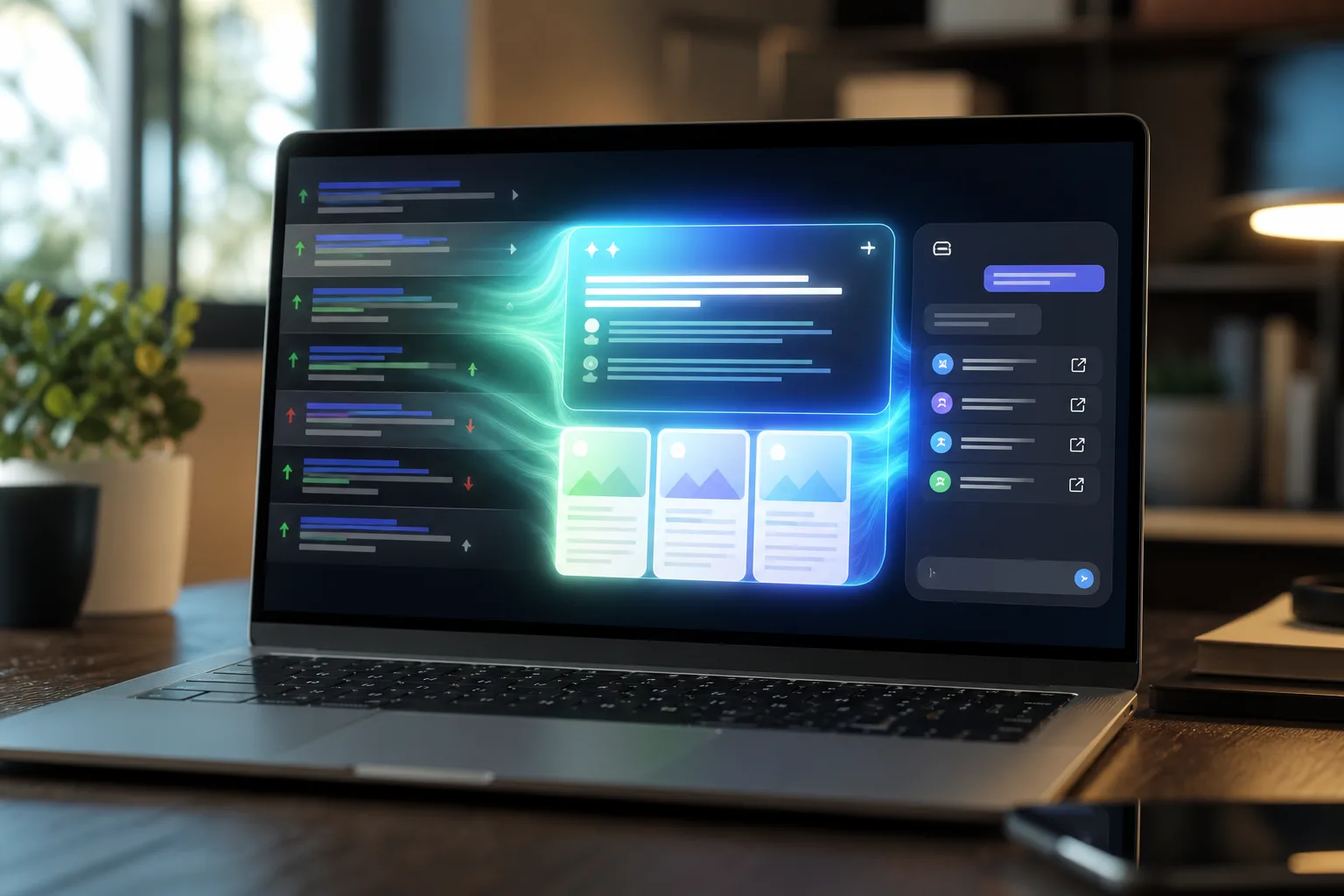
Google AI Overviews use AI to generate summaries of search results. Instead of forcing users to click multiple links, Google pulls information from top-ranking pages and presents it as a conversational answer. Users can ask follow-up questions and get refined answers without leaving Google.
The AI Overview pulls content from multiple sources, often citing them at the end. According to industry analyses, roughly 77% of citations in AI Overviews come from pages already ranking in the top 10 traditional search results. That means traditional SEO still matters, but it's no longer enough.
How to Rank in Google AI Overviews
AI Overviews prioritize content that directly answers questions, provides clear structure, and demonstrates expertise. Here's how to optimize.
- Answer questions directly: Structure content around specific questions. Use clear headings (H2, H3) that match search intent.
- Use structured data: Schema markup helps Google understand your content and increases the chances of being cited in AI results.
- Focus on E-E-A-T: Expertise, Experience, Authoritativeness, and Trustworthiness. Google prioritizes content from credible sources.
- Write concise, clear answers: AI models prefer content that gets to the point. Front-load answers, then add detail.
- Include citations and references: Linking to credible sources increases trustworthiness and helps AI models verify information.
How ChatGPT and AI Search Tools Work
ChatGPT and similar tools (Perplexity, Claude, Gemini) answer questions conversationally. They don't always cite sources, but when they do, they pull from high-authority sites with clear, structured content.
Unlike Google, these tools don't rank pages. They synthesize information from multiple sources and present it as a single answer. That means traditional SEO tactics (backlinks, domain authority, keyword density) are less relevant. What matters is clarity, accuracy, and structure.
Answer Engine Optimization (AEO) vs Traditional SEO
Traditional SEO focuses on ranking in search results. Answer Engine Optimization (AEO) focuses on being the source AI tools use to generate answers. The strategies overlap but have key differences.
Traditional SEO: Keywords, backlinks, technical optimization, domain authority. AEO: Direct answers, structured data, E-E-A-T, clear content hierarchy, citations.
You need both. Rank in traditional search to build authority and traffic. Optimize for AI to ensure your content gets cited and recommended.
Practical Steps to Optimize for AI Search
- Identify common questions your audience asks. Use tools like AnswerThePublic or Google's "People Also Ask."
- Create dedicated FAQ pages or blog posts that answer those questions directly.
- Use clear headings that match the question format (e.g., "How to Optimize for Google AI Overviews").
- Add structured data (FAQ schema, How-To schema, Article schema) to help AI models parse your content.
- Build topical authority by covering related topics comprehensively, not just isolated keywords.
- Monitor AI search results for your target queries. See which sites get cited and analyze their content structure.
The Future of Search
AI search isn't replacing traditional search, but it's changing user behavior. People still click links, but they also get answers without visiting websites. Businesses that adapt early will capture traffic from both traditional and AI search. Those that ignore it will lose visibility as AI tools become the default search experience.
The goal isn't to abandon SEO. It's to evolve it. Optimize for humans first, AI second. Build authority, create valuable content, and structure it in ways that both Google and AI tools can understand.
Google Search Central: AI Overviews and Rankings